
The Moment for the Group of Three Has Arrived
The expiring order has been dominated by too many summits that have descended into soft talking shops. With the hour of challenge late, a summit of hard power will require hard conversations to reach hard solutions.
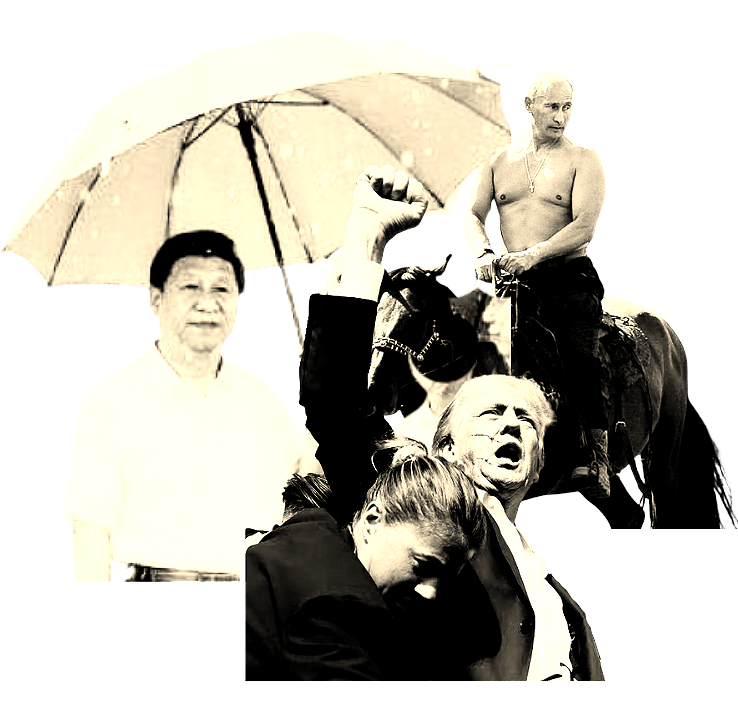
At the highest levels, we have endless gatherings without substance. Insignificant actors sit adjacent to leaders who move mountains. We have prioritized optics over facing challenges.
The time to feel at ease has passed. The world of tomorrow will not operate on today’s schedule. Major powers need to meet regularly. A summit between the presidents of China, Russia, and the United States should become the norm, not the exception. The meeting in Shenzhen should be just the beginning.
The moment for a new Group of Three – the G3 – has arrived.
Challenges Most Existential
The world has been living in the shadow of impending doom for decades. Young schoolchildren once huddled under their desks as atomic armageddon was on the horizon. Ever since the Cuban Missile Crisis, the so-called doomsday clock has been inching closer to midnight, even though it was given a reprieve with the end of the Cold War.
With unipolarity coalescing under Pax Americana in 1991, the greatest threat was ostensibly from the fragile state of the planet. Then came a new millenarian threat: terrorism. Our last three decades have been defined by this dual existential dread.
But are these the existential challenges we face now?
Technology
We now face two big tipping points that could convulse the world into unprecedented disaster, one technological and one geopolitical. Artificial Intelligence, or AI, is on (or in) everyone’s mind. We understand its significance, but given how fast developments are moving, we overestimate our understanding. The technology can be a force for good, but it can also be used to destroy, echoing a familiar trend across human history.
The danger comes not just from AI, but from the possibilities that will emerge from the convergence of AI, robotics, and space with the existing realms of the chemical, biological, and nuclear. Guardrails are needed on the upper limits of what will be acceptable.
Geopolitics
Side-by-side with the AI revolution is the tectonic collision of East and West. In 1914, the world went to war. It happened again in 1939 with World War II, which led to the loss of 60-100 million souls. These wars established new lines on our global map. Today, the lines between powers are set to be redefined.
Hard power exists within parts of the American order, in Europe and Asia, and outside it, from Iran to Israel to North Korea to India and Pakistan. They each deserve their due attention. But the seismic effects will be gravest when the major powers collide.
Today, the United States and Russia are already battling indirectly in Ukraine. What would happen if the two countries went directly to war? Would 10,000 nuclear weapons be in motion? Similarly, China and America have yet to negotiate the demarcation of their spheres of influence. The relative unmanaged risk of world war is unacceptable.
It has been 80 years since a world war. The position that we have outgrown a similar recurrence is naïve. History is replete with wars that followed similar epochs of peace. Furthermore, while a world war has not taken place in this period, many other conflicts have. The global peace has been very violent indeed.
A war involving China, the United States, and Russia would be on a far greater scale than we have ever seen before. It would be fatal for human civilization.
The Meeting of Power
The League of Nations was formed after World War I, but it did not include the United States, and it did not prevent the next great war. The United Nations was meant to be more effective. In 1943, Winston Churchill, Franklin D. Roosevelt, and Josef Stalin met in Tehran to discuss the global order to follow the Second World War. This order lasted until the end of the Cold War, when the United States came to dominate it.
Before the transition to unipolarity, the United States and the Soviets met regularly. These meetings did not preclude NATO meetings. It also did not prevent Washington from reaching out to Beijing in 1972. Great power meetings complement, rather than replace, other gatherings.
Throughout history, and at a global scale since the 19th century, great powers have come face-to-face at the table. These have been the preeminent summits. But today the most preeminent summits – the G7, G20, G77 – while potentially helpful, dilute attention from the real fault lines that need to be bridged.
And Then There Were Three
Hard power rests today, whether we like it or not, with China, the United States, and, yes, Russia.
The idea of a three-way meeting should not be controversial. In Western capitals, there is a sentiment that while world war should be avoided, cold war and proxy conflicts should not. Yet this dynamic contributed to the dynamics that led to the first two world wars.
In the first half of the 20th century, America was on the ascendancy. In the 21st century, China is the rising power. Russia, while weakened, has reconsolidated and has formidable military capabilities, backed by an autarkic industrial apparatus. The room to maneuver to avoid direct war is narrowing every day.
This inexorable reality has led to a new arms race, now with AI and space front and center. We are on the cusp of next-generation nuclear weapons and potentially something far more dangerous. Establishment voices prioritize politically correct forums. A Group of Three summit is meant to bring hardened bullies to the table and deal with their dysfunction in the open. This would benefit the rest of the world that operates under their influence.
To Wait Is Too Late
The wait for such a summit has ended. One meeting, however, is not enough, and its recurrence should be a priority. It will be tempting to portray the powers that concede, even in stature, during a summit as weak; observers would be better suited to encourage compromise.
The expiring order has been dominated by too many summits that have descended into soft talking shops. With the hour of challenge late, a summit of hard power will require hard conversations to reach hard solutions.
The moment has arrived for the Group of Three – the G3 – to become a permanent feature of the new global order.