
Israel May Win the Battle but May Forever Lose the War
Israel needs a new leader at this critical time before it’s too late. One who will lead them away from the path of forever war and back to the path of a hard but lasting peace.
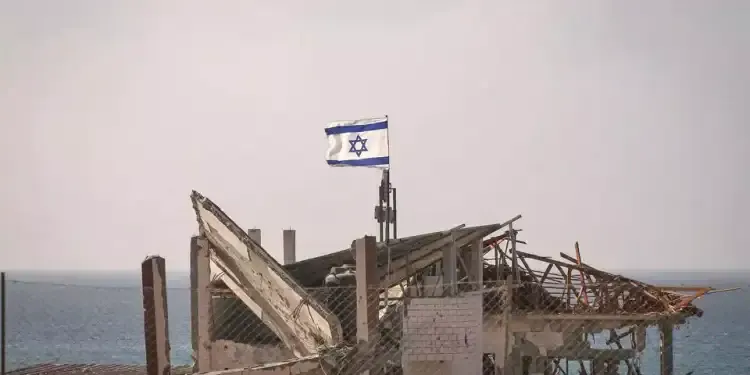

On a macabre Saturday, October 7, a date specifically chosen to maximize trauma, the terrorist group Hamas wielded the sharpest tools of barbarism to exact a toll of incalculable inhumanity on innocent men, women, and children in Israel. It was the greatest loss of Jewish life since the Holocaust. That is unacceptable, not just for the Jewish people, not just for Israel, but for any country and the whole world. And still today, the hostages taken that day are in the hands of Hamas.
I cannot imagine what the grieving families in Israel must be feeling right now. I cannot begin to understand the sleepless nights endured by the loved ones of the captives held by Hamas. How could this have happened? And how can we prevent this from ever happening again?
These questions have been at the forefront for policymakers and people worldwide. Global leaders showed unprecedented solidarity with Israel. It was presented as a real moment of moral clarity.
That moment, however, is gone. It was squandered. We have gone from absolute clarity to the absolute fog of war.
Social media is awash with horrific debates. Were babies decapitated, or did they die from ‘more humane’ acts of murder? Were the children killed by a rocket or an airstrike? Instead of being horrified by the deaths of babies and children, we are arguing about the manner of death to determine if we should object. Horrific.
But the moment has not just passed us in terms of polarization or social media excesses. Israel itself has lost sight in this moment of the long war to win a temporary battle. One more battle. One more demonstration of superiority. One more attempt at projecting power. And Israel will win - in a way.
Many have called 10/7 Israel’s 9/11, and its subsequent response righteous rage. After the 9/11 attacks, the United States easily dislodged the Taliban within two months. Then, it pummelled Afghanistan for two decades, only for the Taliban to return to power. Is that the example to follow? Even President Joe Biden was taken aback in early meetings with Israel to find there was no overall strategy for the day after, and he publicly called for a clear strategy.
I write these words today while in the Gulf. In recent years, Israel has seen a sea change in possibilities. The Abraham Accords created a new space for Israel in the region. The talks underway with Saudi Arabia would have had a seismic impact throughout the Muslim world. Even President Erdogan of Turkey and Prime Minister Netanyahu held cordial talks in New York in September after over a decade of near-frozen relations.
And now? The leaders of all Muslim countries, including Iran, Saudi Arabia, and Turkey, are meeting to discuss their coordinated response to the latest carnage in Gaza. Israel has even withdrawn its Ambassador to Turkey. I say carnage because it is carnage. Do not look away because that is what the entire world is seeing. Over 10,000 civilians dead or wounded. More than 1 million – half the population of Gaza –displaced. Entire neighborhoods leveled.
Many politicians in Washington, D.C., and Israel may say it is worth the price. It is often a common refrain when waging war. The civilian lives lost, while unfortunate, are worth the price. But is winning one battle worth losing the war?
I want to be clear. Israel will never be stronger than it is today. Other countries in the region are becoming more populous, wealthier, and militarily more capable. The moment we were in, which, yes, Hamas tried to undermine, was leading Israel down a path of regional integration. The path was not fully paved, and much more progress needed to be made on the Palestinian issue, but it was there.
Every day that the carnage in Gaza continues, that path is being blocked a little bit more. And soon it will be closed forever. Does Israel want to go it alone forever? Is that in its security interest? Does it make sense to turn potentially friendly nations in Turkey, Saudi Arabia, and others in the Gulf into enemies once again?
Of course, the people of Israel want to live in peace and security. How can they accept Hamas on their doorstep? Yet, in peace and war, there are also hard compromises. New possibilities exist, including ones we could not even have imagined. And in Israel, even hawks like Ariel Sharon looked for these new paths. Towards the end of his life, he knew this was the only way forward for Israel.
Today, Israel is led by a man indulging his desire for power, exploiting his people's righteous rage after the barbarism of October 7. It is only fitting to refer back to Sharon’s view of Prime Minister Benjamin Netanyahu.
“Netanyahu is pressured easily, gets into a panic, and loses his senses. To run a country like Israel, a leader needs to have reason and judgment and nerves of steel, two traits he does not have."
Israel needs a new leader at this critical time before it’s too late. One who will lead them away from the path of forever war and back to the path of a hard but lasting peace.
This essay was originally distributed privately to select recipients and is being released publicly 3 years after its original date of authorship.